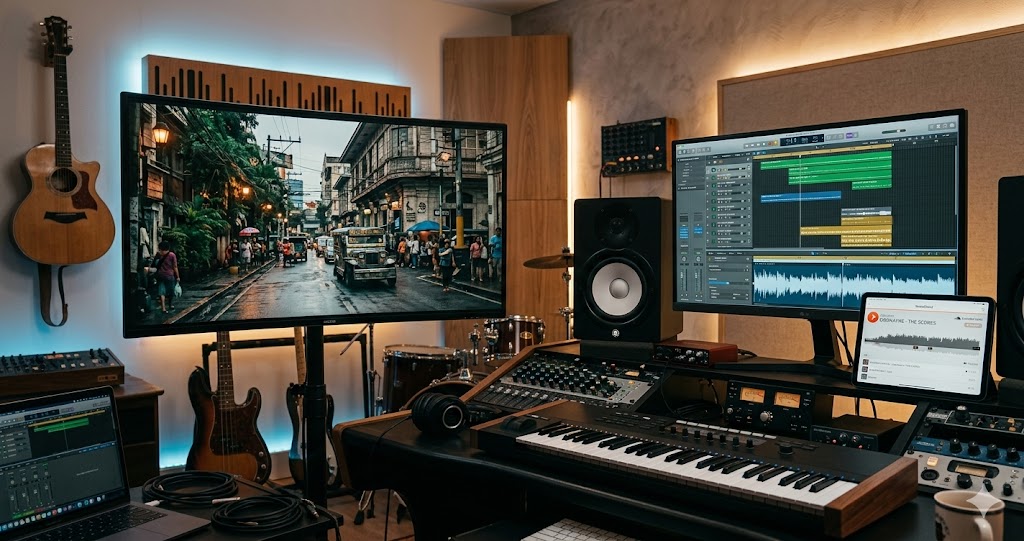
Film & Video Game Music Composer in Manila, Philippines

Tag: film composer philippines

Film composition topics with a Philippines focus.

  • Why Hiring a Local Film Composer in the Philippines Elevates Your Project

    Why Hiring a Local Film Composer in the Philippines Elevates Your Project

    The Art of the Score

    In the rapidly evolving landscape of Southeast Asian cinema, the “sound of stories” has never been more vital. Whether you are an indie filmmaker prepping for a festival run or a game developer building an immersive world, the music is the heartbeat of your narrative. Finding a film composer in the Philippines who understands both the cultural nuances and global technical standards is the key to a memorable production.

    In this post, we explore the impact of custom scoring and why local talent like Godwayne is redefining the sonic identity of Filipino media.

    1. The Power of Original Scoring vs. Stock Music

    Many creators start with stock music libraries to save time. However, a professional film composer does more than just provide background noise; they create a bespoke emotional roadmap.

    • Narrative Synchronization: A custom score reacts to a character’s subtle breath or a sudden plot twist.
    • Unique Brand Identity: For commercial ads, a unique “audio logo” makes your product instantly recognizable.
    • Emotional Precision: From the tension of a Manila-set thriller to the nostalgia of a rural drama, original music captures the soul of the setting.

    2. Spotlight: Godwayne Cinematic Portfolio

    When searching for a music producer for indie artists or a soundtrack composer for games, versatility is non-negotiable. Godwayne’s background as a graduate of Music Production from De La Salle-College of Saint Benilde provides him with a rigorous technical foundation.

    As a multi-instrumentalist proficient in guitar, bass, piano, and even the harmonica, his scores blend organic performance with cutting-edge digital sound design.

    Listen to the Sound of Stories

    3. Scoring for Different Mediums: Film, Games, and Ads

    The requirements for a film composer in the Philippines vary wildly depending on the platform:

    MediumKey RequirementsGodwayne’s Approach
    Indie FilmsNarrative tension & character themesThematic motifs that evolve with the story.
    Video GamesAdaptive, non-linear compositionsMusic that triggers and shifts based on player action.
    CommercialsHigh-impact, 30-second memorabilityPrecision engineering to drive audience action.

    4. Why Work with a Local Filipino Composer?

    Collaboration is easier when your composer understands the local industry’s pace and the “Filipino sensibility” in storytelling. By working with a local professional, you gain:

    1. Seamless Communication: No time-zone hurdles for feedback sessions.
    2. Cultural Resonance: Utilizing instruments or scales that feel authentically “home.”
    3. Support for Local Talent: Strengthening the Philippine creative economy.

    Ready to Score Your Next Masterpiece?

    The right music doesn’t just fill the silence—it tells the story that the visuals cannot. If you are looking for a film composer in the Philippines who brings technical mastery and emotional depth to the table, look no further than Godwayne.

    Work with me on your next project.

    Send me a message

  • How to Hire a Film Score Composer in the Philippines

    How to Hire a Film Score Composer in the Philippines

    How to Hire a Film Score Composer in the Philippines (Director’s Checklist)

    Hiring a film score composer in the Philippines can level up your film instantly—when it’s done right. The right score can strengthen emotion, improve pacing, and make your scenes feel “bigger” even if you’re working with an indie budget.

    The problem is: many filmmakers only think about music at the end, when deadlines are close and the picture is still changing. That’s when budgets stretch, revisions multiply, and the score becomes stressful instead of exciting.

    This guide is a step-by-step checklist you can follow to confidently hire a film composer in the Philippines, communicate your vision clearly, and get professional deliverables (mixes, stems, and versions) that make your edit easier.

    Step 1: Decide what you actually need (before you message anyone)

    A lot of productions say “We need a score,” when they really need one of these:

    A) Full narrative score (most common for shorts)

    • main theme + 3–10 cues
    • emotional peak cue
    • ending cue

    B) Minimal underscore (documentary / drama)

    • textures and tension beds
    • subtle themes
    • transitions

    C) Trailer / teaser package (often forgotten)

    • 15s / 30s / 60s cuts
    • stingers and hits
    • social edits

    If you define the scope first, you’ll get accurate quotes and fewer surprises later.

    Step 2: Prepare a proper “composer brief” (copy/paste checklist)

    When hiring a film score composer in the Philippines, send this in your first message:

    1. Film length (runtime)
    2. Music minutes estimate (ex: “6–10 minutes of score”)
    3. Genre + tone (ex: coming-of-age drama, hopeful but restrained)
    4. Deadline (festival date / picture lock date)
    5. Reference tracks (2–3 links)
    6. Scenes needing music (timestamps if possible)
    7. Deliverables needed
      • WAV mix
      • stems
      • cut-downs
      • alt versions
    8. Where it will be used (festival / YouTube / streaming / ads)
    9. Revision rounds expected (1–2 is normal)

    The more specific you are, the more cinematic the result will be—and the cheaper the process becomes.

    Step 3: Listen for “story thinking,” not just nice music

    When you review a composer’s portfolio, ask yourself:

    • Do the tracks build naturally?
    • Are transitions clean?
    • Does the music feel like it supports character and pacing, not just “cool sound”?

    A good film composer thinks like an editor and storyteller.

    Listen to one of my composition.

    Step 4: Ask these 10 questions before hiring

    Use this as your director’s checklist:

    1. How do you prefer to do spotting (call/video notes/timestamp list)?
    2. Can you deliver WAV + stems?
    3. How many revision rounds are included?
    4. What happens if picture changes after scoring begins?
    5. Can you provide alt versions (no drums, lighter, short ending)?
    6. What’s your typical timeline per minute of music?
    7. Do you handle final mix/master, or do you deliver to a mixer?
    8. What is your policy on credits and portfolio use?
    9. Are you able to match reference style without copying?
    10. What’s the best way to give feedback so you can move fast?

    A professional composer will answer confidently and clearly.

    Step 5: Understand pricing models (so you don’t get stuck)

    Most film composers quote one of these:

    • Per finished minute (most transparent)
    • Flat project fee (works for shorts, but define scope)
    • Package rates (best for trailers and ads)

    Always confirm:

    • number of minutes included
    • deliverables included
    • revision limits
    • payment schedule

    Step 6: The deliverables you should request (minimum)

    If you want your post-production to go smoothly, request:

    Final Mix WAV (48kHz/24-bit if possible)
    Stems (4–8 stems: strings, perc, synths, etc.)
    Alt versions (at least for key cues)
    Naming system (Cue01_Opening, Cue02_Reveal, etc.)

    Why stems matter: editors can rebalance under dialogue without asking for a re-export.

    Step 7: Common red flags (avoid these)

    Be careful if a composer:

    • can’t explain workflow (spotting → cue → revisions → delivery)
    • refuses to provide stems “because it’s extra” (it is extra, but should be possible)
    • delivers only MP3 instead of WAV
    • uses copyrighted samples illegally or says “I just copy the reference”
    • can’t commit to a timeline or communication schedule

    Step 8: The easiest workflow for indie films (recommended)

    Here’s a simple process that works well for PH indie productions:

    1. Spotting call (30–60 mins)
    2. Composer sends theme sketch (24–72 hrs)
    3. Director approves direction
    4. Composer scores cues in batches
    5. One revision round per batch
    6. Final export + stems

    This keeps both sides moving and prevents last-minute panic.

    Final: If you need a film score composer in the Philippines

    If you’re looking for a film score composer in the Philippines who can deliver cinematic music, clean mixes, and practical stems for post-production, you can reach Godwayne here:

    📩 Email: email@godwayne.com
    🎧 SoundCloud: https://soundcloud.com/godwayne
    🌐 Website: https://godwayne.com